In this space, we share how our research activity transcends the academic sphere to generate a real impact on society, public policies, and healthcare. Knowledge transfer is the process through which we transform the scientific evidence generated through research into useful, accessible, and applicable tools for professionals, regulators, and the general public.
 “For Me, It Meant Changing My Skin”: A Photo-Elicitation Study on the Emotional and Social Well-Being of Women During Perimenopause in Barcelona
This report presents the findings of a qualitative study led by the Institut de Recerca en Atenció Primària Jordi Gol i Gurina in collaboration with the Agència de Salut Pública de Barcelona on the emotional and social experiences of perimenopause among women in the metropolitan area of Barcelona. Through discussion groups and photo-elicitation techniques involving 20 women aged 41 to 66, the study explores how this life stage relates to gender roles, care responsibilities, sexuality, social relationships, and healthcare experiences. The findings show that perimenopause is a diverse experience strongly shaped by social and economic factors, often marked by lack of information, invisibility, and the dismissal of women’s discomfort and needs. At the same time, many participants described this stage as a process of transformation, self-knowledge, and empowerment. The study highlights the need to strengthen community support spaces, improve healthcare responses, and promote more comprehensive and non-stigmatizing public policies.

This report presents the findings of the study What Makes Me Feel Good? Emotional Health in Adolescence in Catalonia, a participatory research project led by the Jordi Gol i Gurina University Institute for Primary Care Research (funded by the Carlos III Health Institute, FIS PI22/01278), which explores the factors that promote emotional well-being from the perspective of adolescents themselves. The study was conducted using the Photovoice methodology, which combines photography and critical dialogue to enable participants to represent and interpret their experiences. A total of 40 adolescents aged 13 to 15 took part, from three secondary schools in Catalonia (two in Barcelona and one in Artesa de Segre), in a process carried out over several group sessions.
The findings show that the main factors associated with emotional well-being are peace and connections. Peace is expressed through activities and spaces that provide a sense of calm, such as engaging in hobbies, spending time in nature, recalling meaningful memories, listening to music, or resting. Connections with family, friends, animals, the local environment, and culture are described as sources of care, affection, belonging, and security, although they can also become sources of distress due to fear of loss or experiences of racism or discrimination.
The research also highlights that emotional well-being is deeply shaped by each adolescent’s social and economic circumstances, which determine their opportunities to access leisure activities, culture, or natural spaces and, consequently, their ability to develop strategies that support their well-being. The study emphasises the importance of incorporating adolescents’ voices into research and into the design of educational, social, and healthcare policies and interventions, recognising emotional well-being as a collective construct that is closely linked to the contexts in which they live.
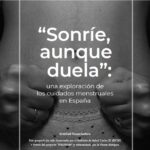
This photo book is the creative outcome of a qualitative study exploring the care practices of emotional health of women and people who menstruate when experiencing menstrual distress, such as pain, emotional changes, or menstrual poverty. The study employed the participatory method of Photovoice and was conducted across five autonomous communities in Spain (Andalusia, the Canary Islands, Catalonia, Galicia, and the Basque Country), coordinated by Laura Medina Perucha of the Jordi Gol i Gurina University Institute for Research in Primary Care (IDIAPJGol).
Through photographs taken by participants and their accompanying narratives, the study reveals how social structures are connected to menstrual distress. The findings further reveal that menstrual experiences are not only characterised by moments of distress, but can also be moments of care, compassion, and connection.
The experiences shared by the participants point to an urgent need to address the structural factors that continue to produce and shape menstrual distress. They additionally underscore the need for participatory research that approaches menstrual experiences through concepts such as care, that encompass their diversity while attending to the structural injustices that shape them.