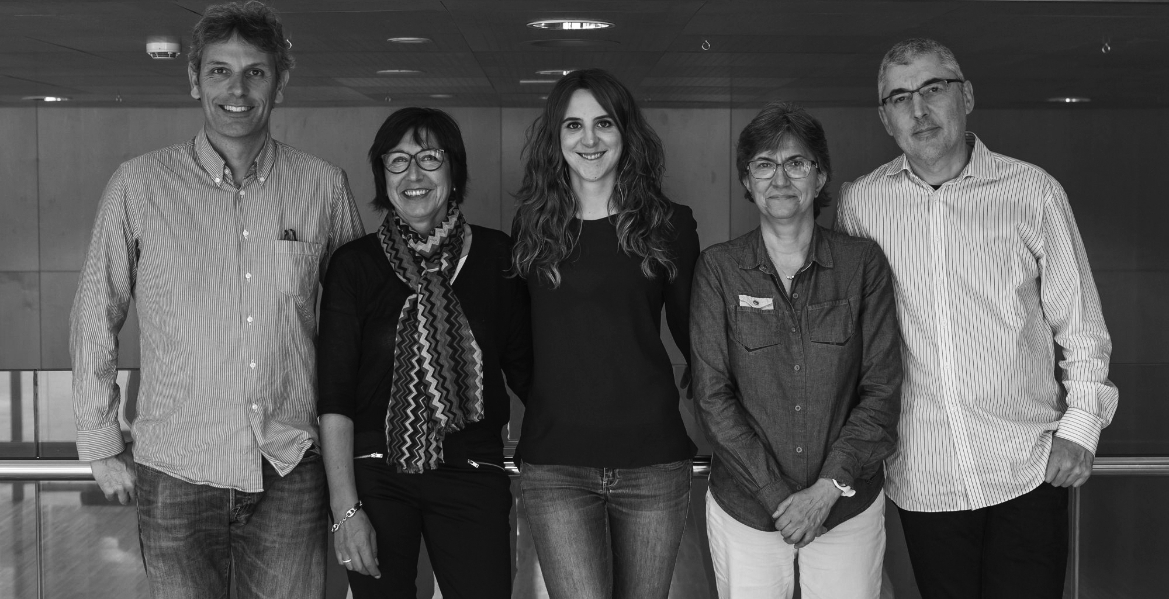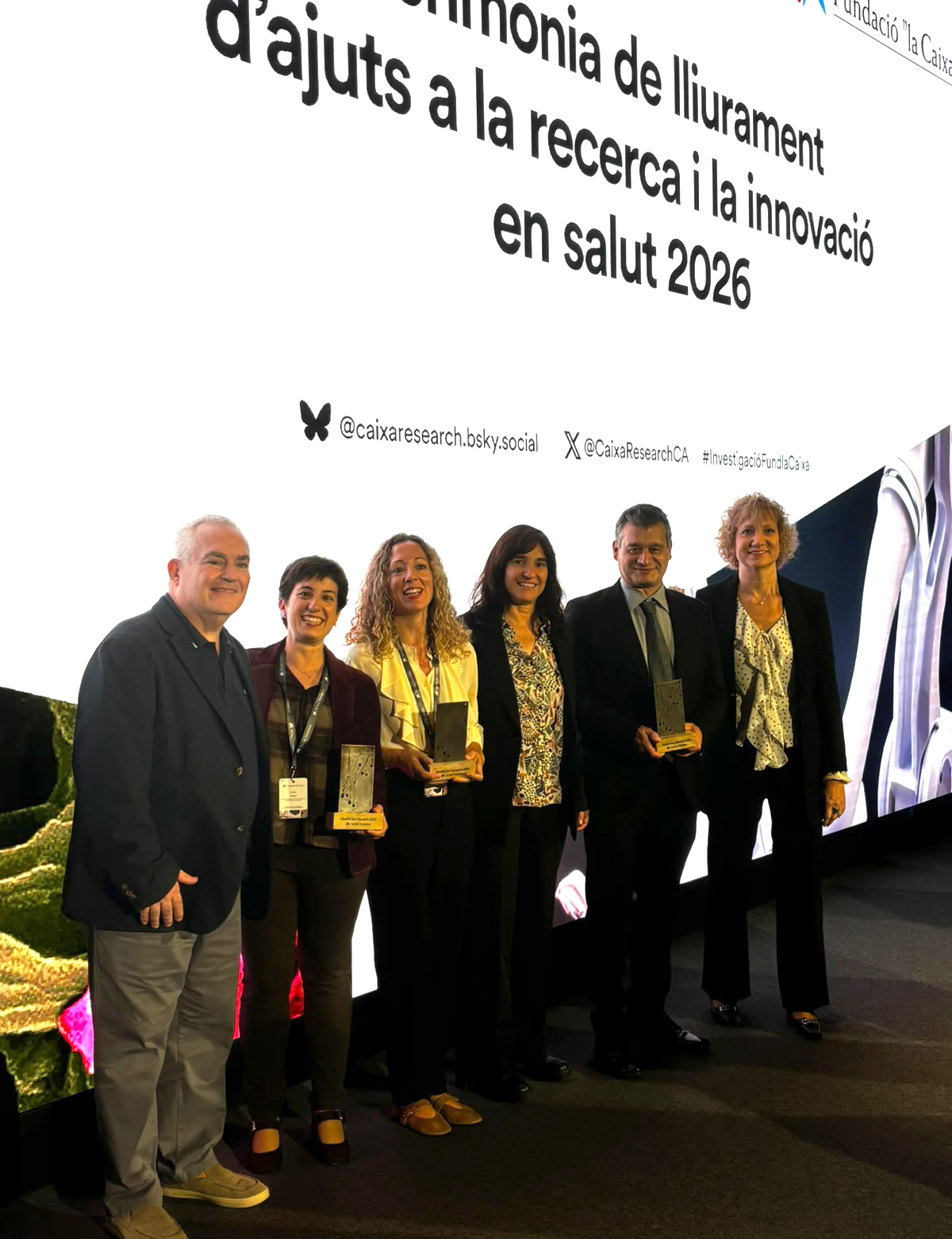
Three research projects led by IDIAPJGol researchers have received funding through the ”la Caixa” Foundation’s HealthCare Research 2026 call. These are the integrated care model for people with chronic and complex wounds implemented in the Metropolitana Sud and Penedès Primary Care Directorate (UFECAP); the ODISSEA project, aimed at preventing mental health stigma in primary care centres; and HH-NICU, an initiative designed to improve hand hygiene among family members to prevent infections in babies admitted to neonatal intensive care units.
IDIAPJGol is also involved in another funded project, PAVE, led by the Catalan Institute of Oncology (ICO), which aims to develop a cervical cancer screening system using artificial intelligence.
The grants were announced on 15 October 2026 at an event held at CosmoCaixa in Barcelona. UFECAP has received €145,200 in funding; ODISSEA, €80,000; and HH-NICU, €79,043. Meanwhile, PAVE has been awarded approximately €299,988.
Integrated care for complex chronic wounds
The UFECAP project, led by Miguel Ángel Díaz, a researcher at the IDIAPJGol and Catalan Health Institute (ICS) Metropolitana Sud Research Support Unit (USR), aims to assess the impact of the integrated care model for people with chronic and complex wounds implemented in the Metropolitana Sud and Penedès Primary Care Directorate.
This model is based on the involvement of advanced practice nurses, coordination between healthcare professionals and the application of shared clinical criteria to improve wound treatment. By analysing real-world clinical data obtained from the Information System for Research in Primary Care (SIDIAP), the study will examine the outcomes of this care model to provide evidence of its effectiveness and help improve quality of care, clinical efficiency and the sustainability of the healthcare system.
Improving mental healthcare
The ODISSEA project is led by Laia Gené and Enric Aragonès, researchers at the IDIAPJGol and Catalan Health Institute (ICS) Reus-Tarragona Research Support Unit (USR), with the participation of the Catalan Association for the Fight Against Mental Health Stigma (Obertament).
The aim of this research is to improve mental healthcare in primary care centres through a training intervention designed to help healthcare professionals identify and reduce biases that may influence patient care.
The 24-month pilot study will be conducted in at least six centres across Catalonia. It will combine first-hand accounts from people with lived experience of mental health conditions, reflective activities and digital resources, with the involvement of Obertament. The study will assess the feasibility and acceptability of the intervention, as well as initial changes in professionals’ attitudes and knowledge, with the aim of developing training resources that can be rolled out to other centres.
Fluorescent gel to assess hand hygiene
The HH-NICU project, led by Anna Bordas, a researcher at the Reus-Tarragona Research Support Unit (USR), aims to improve hand hygiene among family members and visitors of babies admitted to neonatal intensive care units, strengthening the prevention of respiratory and gastrointestinal infections.
The initiative also involves the Centre for Epidemiological Studies on Sexually Transmitted Infections and HIV/AIDS in Catalonia, based at the Germans Trias i Pujol Research Institute (CEEISCAT-IGTP), and the Southern Catalonia Biomedical Research Institute (IRB CatSud).
The intervention will combine a short practical training session with the use of fluorescent gel, ultraviolet light and an automated image analysis system to assess the correct application of alcohol-based hand sanitiser. The study will evaluate whether this intervention improves hand hygiene quality, whether it is feasible and well accepted by families, and explore its potential association with reduced infections. The findings will help assess its integration into routine clinical practice and inform the design of a future multicentre study.
Improving the diagnosis and treatment of cervical cancer
The PAVE project focuses on improving the early detection of cervical cancer through a strategy combining self-sampling, human papillomavirus (HPV) genotyping and artificial intelligence-assisted analysis.
This approach aims to facilitate screening and help identify people at greater risk of developing precancerous lesions, enabling earlier diagnosis and treatment. Self-sampling may encourage participation in screening programmes, while HPV genotyping and artificial intelligence tools can provide additional information to improve risk assessment.
The project is led by the Catalan Institute of Oncology (ICO), with the participation of Clara Grau and Betlem Salvador, researchers at the IDIAPJGol and ICS Metropolitana Sud Research Support Unit (USR).
The HealthCare Research 2026 call supports studies aimed at designing, testing and evaluating healthcare interventions in real-world settings. Its objective is to help translate research findings into earlier, more accessible, personalised and equitable healthcare.