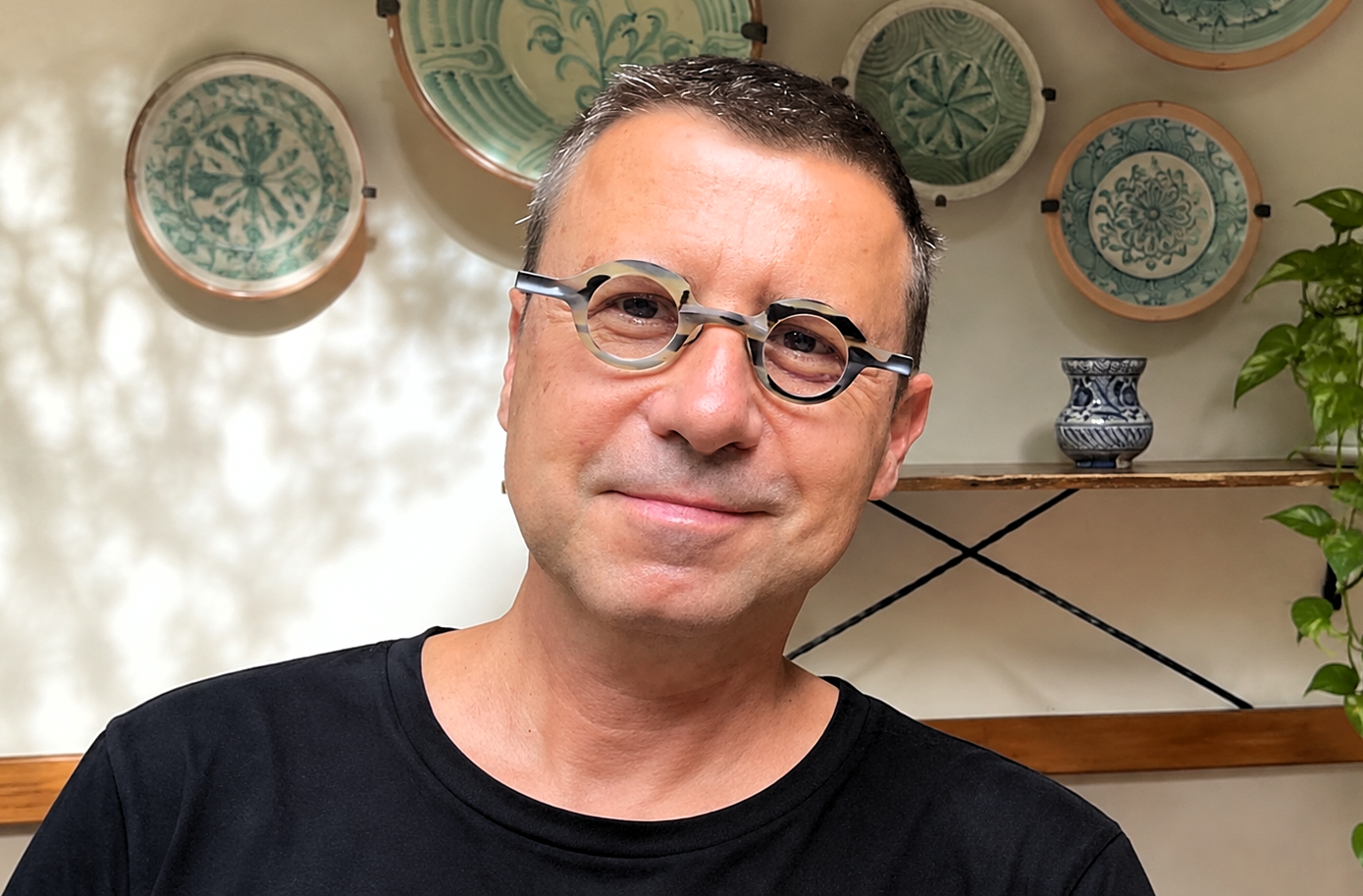
“You’re a doctor and a nurse, could you come to school one day and tell us about the work you do?” Over a decade ago, Maria, who was five years old at the time, asked her father this. A few months later, RCParvulari® was born, an initiative that teaches young children how to react when they encounter someone who has lost consciousness.
The father is David Pedrazas, who at the time was working as a family physician at the Primary Care Center (CAP) in Abrera and now practices at the CAP Gòtic in Barcelona. A nurse, a specialist in family and community medicine, and the project’s principal investigator at the Jordi Gol University Institute for Primary Care Research (IDIAPJGol), Pedrazas has always been deeply aware of the importance of educating people about health-related matters. “The idea was to create a useful, participatory, and adaptable proposal that could reach Maria’s class, but also any other school,” explains Pedrazas.
The result was a theoretical and practical training session lasting about 45 minutes, aimed at children in the final year of preschool (known as P5, or currently I5). Through various educational materials, the children were taught how to recognize a potential emergency and how to call for help. The core message of the training is that, in the event of an emergency, one must first remain calm and then seek professional assistance by calling 112.
Using giant mobile phones made of EVA foam, an illustrated narrative sequence, posters, photographs, and even a song adapted specifically for the occasion, Pedrazas and other healthcare professionals, with the collaboration of teachers, parents, and students, designed the training session. “We wanted to convey the message in different ways; with children of this age, you need to be dynamic yet highly repetitive, using a variety of resources to express the same point. By doing this, and by involving them, you ensure they stay attentive and engaged in the training.”
The core message to be conveyed was that, in the event of a potential emergency, one should remain calm, alert an adult, and call 112. Through practical, participatory activities, the children learned that this is the appropriate course of action if they encounter someone who appears to be asleep but does not respond when called or shaken. To help them remember the number, a mnemonic device was used, associating each digit with parts of the face: 1 mouth, 1 nose, and 2 eyes.
RCParvulari does not aim to teach cardiopulmonary resuscitation maneuvers or how to place a person in the recovery position. The goal was for children to be able to recognize a potential emergency and summon professional help.
Healthcare professionals and educators, as well as parents, and even Maria herself, participated in designing the proposal; Maria drew the initial sketch of the EVA foam mobile phone, “which was the star object of the role-playing game we designed.” Pedrazas recalls with a smile that, once the design for the phone was complete, she reached out to Apple CEO Tim Cook to ask for the company’s collaboration on the project, though he never responded.
The song, based on the music of “Había una vez un barquito chiquitito”, was adapted by a band created specifically for the project, called Mimaluda. “It’s an acronym formed from the names of the family members who made up the group: my son Miguel, my daughters Maria and Lucía, and my brother-in-law David. Cristina, my wife, also contributed.”
Once all the materials were ready, the trial was registered on ClinicalTrials.gov (under the code NCT03443167), and a study to evaluate its efficacy was launched between 2018 and 2019. It was a cluster-randomized clinical trial, in which the unit of assignment was the educational center rather than the individual children.
A total of 1,327 children in their final year of preschool (P5) from 41 schools in the Baix Llobregat region participated. The participants were divided into two groups: children in the intervention group received theoretical and practical training using the RCParvulari® methodology, while those in the control group received conventional, purely theoretical training. In this way, the study made it possible to compare whether the inclusion of practical, participatory activities improved learning compared to training that was exclusively theoretical.
Both groups completed the same questionnaire before the training, immediately afterward, and during a follow-up assessment—between three and twelve months later—to evaluate both the acquisition of knowledge and its retention over time.
The statistically significant results were published in 2023 in the journal Anales de Pediatría. According to the study, children who received the theoretical-practical training showed significantly greater improvement than those in the control group—both in terms of recognizing an emergency and calling 112, and in recalling the mnemonic device. Between three and twelve months after the session, 71.4% of the children in the intervention group remembered the number 112, and 19% recalled the mnemonic (mouth, nose, and eyes). In contrast, within the control group, which received only theoretical instruction, 52.7% remembered the emergency number, while only 1% recalled the mnemonic.
“Initially, some school administrations and quite a few families were concerned that talking about basic life support to such young children might cause them harm or trauma,” the doctor recalls. Once it was explained to them that this was a scientific project, approved by the IDIAPJGol research ethics committee, and that similar initiatives had already been carried out in the Terres de l’Ebre region and several Scandinavian countries, they became less hesitant. “They placed their trust in us; we conducted the clinical trial, and the reception was excellent. The children enjoyed themselves, they learned, and we are not aware of any negative effects.”
Another challenge faced by Pedrazas’s team was designing a questionnaire suitable for children who do not yet know how to read or write, or who are just beginning to learn. “We prepared a highly visual worksheet containing basic information and drawings; the children had to identify, from among various shapes and numbers, the number 112, as well as the elements we used to explain how to recognize an emergency.” Before being put into use, the questionnaire was validated and tested with a pilot group of children.
The form also included two figures, one male and one female, so that the children could select the one they identified with. “Some children did not identify with either figure and drew one of their own,” explains Pedrazas. Although this observation was not part of the study’s objectives and was not specifically analyzed, the doctor notes that “it made us realize that tools designed for children must be inclusive and allow for self-expression that goes beyond rigid, predefined categories.”
More than a decade after that initial idea, Pedrazas would like to see this methodology applied routinely in schools. “This project is an example of how an idea that emerged from clinical practice can become a useful intervention. We have carried out the work, evaluated it, and published the results; we are now making the methodology and materials available to any individual or organization that wishes to implement them. We also offer to explain how it works and to provide training for teams.”
The project’s principal investigator highlights that RCParvulari® is an approach that is easy to learn and low-cost. Furthermore, “it helps bring primary care research closer to the general public and addresses real-world needs.” Although the incidence of out-of-hospital cardiac arrest is low, Pedrazas adds that “if a trained individual can help save a life, the impact of the intervention is enormous.” The unique aspect of RCParvulari is that children can learn, from a very young age, how to recognize a potential emergency, alert an adult, and call 112.
The doctor at the Gòtic Primary Care Centre (CAP Gòtic) points out that “with the right training, anyone, of any age, can help save a life,” and adds, “I know of a child who had received this training and, upon seeing an elderly person faint during a school event, remembered that they needed to call 112.”