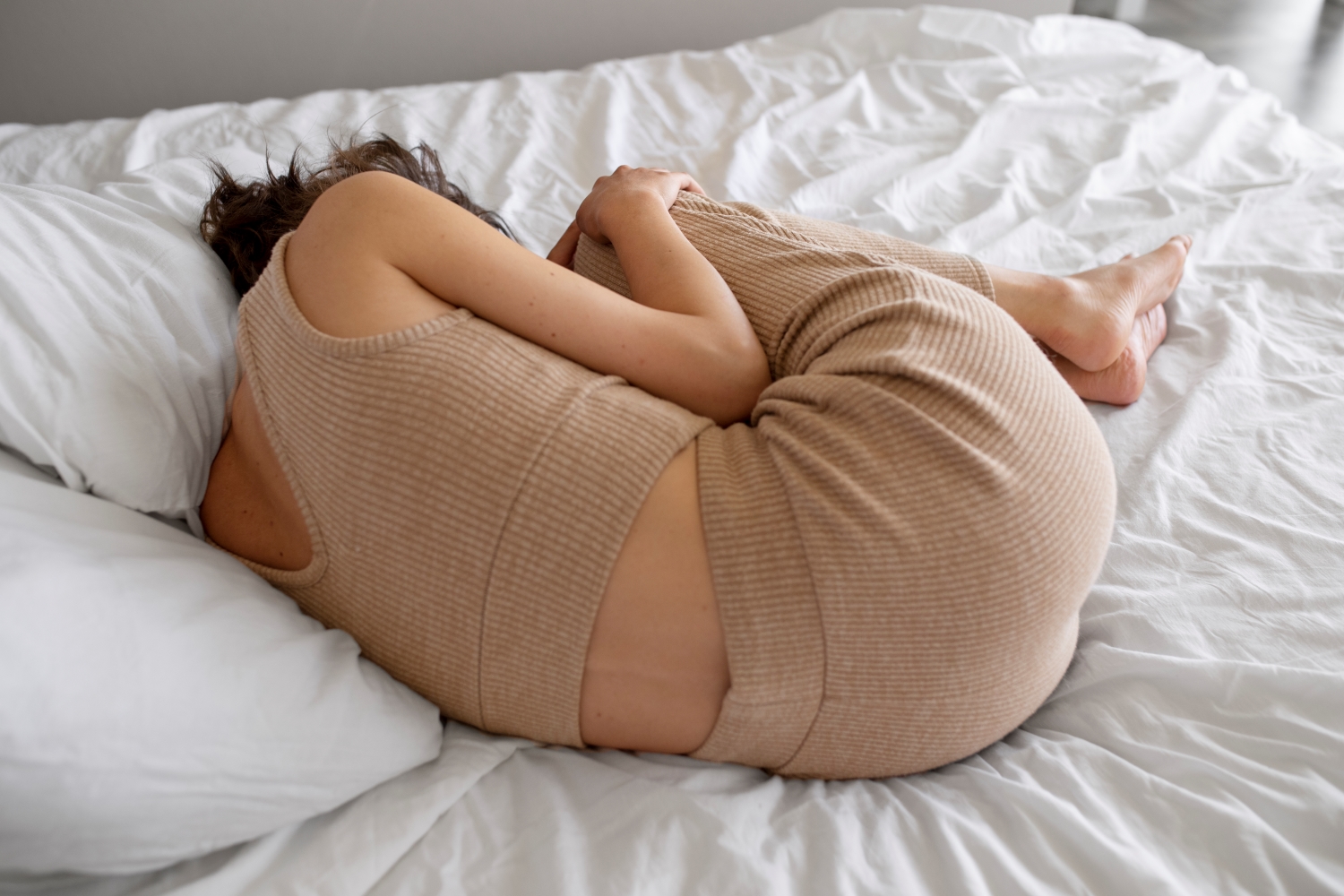
A study coordinated by researchers at the Jordi Gol Institute for Primary Care Research (IDIAPJGol), recently published in the journal Sexual and Reproductive Health Matters, concludes that menstrual pain, heavy bleeding and menstrual stigma are closely associated with a higher risk of depression and anxiety.
The study reports the findings of a survey involving 1,404 women and people who menstruate aged over 18, recruited from 32 primary care and sexual and reproductive health centres in Andalusia, the Basque Country, the Canary Islands, Galicia and Catalonia. The analysis examines the relationship between various aspects of menstrual health and symptoms of depression and anxiety.
The results show that the poorer a person’s menstrual health, the more likely they are to experience poorer mental health. Blood loss exceeding 80 millilitres per cycle is associated with a 61% higher likelihood of severe depression and a 67% higher likelihood of severe anxiety. The intensity of menstrual pain shows an even stronger association: those reporting more severe pain are twice as likely to experience severe depression and 82% more likely to have severe anxiety.
However, the strongest association identified in the study is with the frequency of premenstrual symptoms. According to the findings, people who experience these symptoms more frequently and intensely are more than 14 times as likely to have severe depression and almost 13 times as likely to suffer from severe anxiety.
Furthermore, the impact of menstrual health on social life is also associated with poorer mental health outcomes, increasing the likelihood of severe depression almost sevenfold. Menstrual poverty, understood as financial difficulties in purchasing menstrual products or having to use them for longer than recommended to save money, increases this likelihood by approximately two and a half times. Experiences of menstrual taboo, stigma or discrimination follow a similar pattern, with the likelihood increasing by more than 100%.
The study also identifies differences according to socioeconomic background. Participants born outside Spain report poorer mental health outcomes associated with menstrual pain and menstrual poverty than those born in Spain. In addition, participants aged between 36 and 45 who report a greater impact of menstruation on their social participation are more likely to experience more severe anxiety or depression.
IDIAPJGol researcher Andrea García Egea, first author of the article, highlights that “the study’s findings contribute to a deeper understanding of the relationship between menstrual health and mental health from the perspective of social and gender inequalities”.
Meanwhile, fellow IDIAPJGol researcher Laura Medina Perucha, who coordinated the study, points out that the research “provides evidence to support community-based interventions and public policies aimed at improving the menstrual health of women and people who menstruate”. Medina Perucha recalls that Spain passed its first organic law recognising menstrual-related rights in 2023, including access to menstrual products and menstrual education. However, she considers that “a framework that explicitly incorporates emotional and mental health is still lacking”.
García-Egea A, López-Jiménez T, Apalategi-Gómez U, Fernández-Domínguez MJ, Rodríguez-Domínguez C, Mahtani-Chugani V; Menstrual and Equity Health Team; Berenguera A, Medina-Perucha L. Menstrual health outcomes and associations with depression and anxiety in Spain: a cross-sectional study. Sex Reprod Health Matters. 2026 Jul 31:1-38. doi: 10.1080/26410397.2026.2702119. PMID: 42536707.