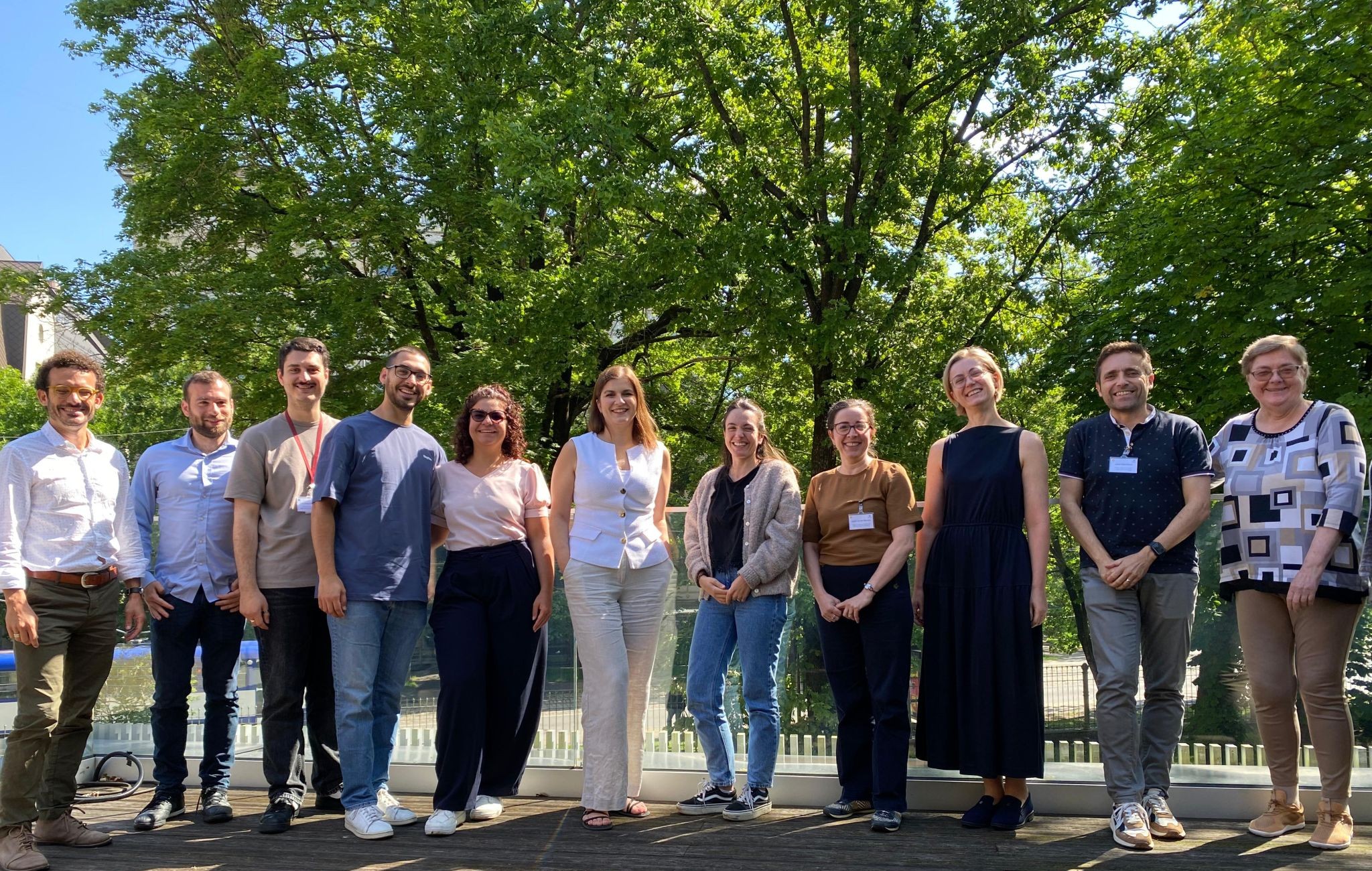
The Central Catalonia Research Support Unit of the IDIAPJGol and the Catalan Health Institute (ICS) are participating in the European project ePro-Schools (GA 101095426), a digital health initiative designed to promote physical activity and healthy eating habits among adolescents aged 11 to 14, particularly those living in socioeconomically disadvantaged areas.
The project is implemented in schools and delivers an innovative intervention based on digital tools, with the aim of improving young people’s health and preventing non-communicable diseases from an early age. In Central Catalonia, two secondary schools, one in Manresa and one in the Anoia region, are taking part in the intervention, while three additional schools, in Torelló, Gironella and Manresa, serve as control sites where the project’s activities are being evaluated.
The project is currently entering the final stage of its randomised clinical trial. The second wave of data collection is now underway, using health questionnaires completed by participating adolescents to assess the impact of the implemented interventions. Before the summer, a series of qualitative interviews with teaching staff will also begin to gather their experiences and perspectives.
According to Eugeni Mas, ICS dietitian-nutritionist and lead investigator for the study in Central Catalonia, “The added value of ePro-Schools is that we have involved schools and adolescents from vulnerable communities from the very beginning, allowing us to better understand their real needs.”
The initiative is built around an interactive platform that provides expert-reviewed educational resources and practical advice to encourage healthy habits at every level. Mas emphasises that the platform “does not present healthy lifestyles as an obligation for adolescents, but rather offers them a safe and trustworthy reference space.”
With the end of the current school year, ePro-Schools completes its first implementation phase. From September onwards, the project will move into its next stage by providing full access to the interactive platform to schools in the control group, ensuring that the entire educational community involved can benefit from its health promotion tools during the coming academic year.
Supporting the educational community
The programme is delivered through the ePro-Schools platform, which includes interactive digital modules for students and teachers, as well as informative resources for families and the wider educational community.
Specifically, the platform offers seven nutrition modules, nine physical activity modules for adolescents, and six educational modules for teachers.
In addition, the project includes a complementary website featuring tailored resources for families, students and education professionals, with the aim of encouraging the active involvement of the entire school community.
Co-creation and local adaptation
One of the key features of ePro-Schools is its co-creation approach, which allows interventions to be adapted to the specific needs of each region and educational environment. This methodology helps increase both the acceptability and effectiveness of the programme by taking social and cultural factors into account.
The project’s impact will be assessed through a range of indicators, including improvements in lifestyle habits, participant satisfaction, and measures related to the feasibility and economic sustainability of the intervention.
Prevention through schools
A growing body of scientific evidence shows that school-based interventions play a key role in promoting healthy lifestyles and preventing future disease. In line with this evidence, organisations such as the World Health Organization stress the importance of acting during childhood and adolescence to reduce the risk of chronic diseases later in life.
A scalable and transferable model
ePro-Schools has been designed as an accessible, scalable and transferable model that can be implemented across different school settings and regions, facilitating the wider adoption of community health interventions.
The initiative is funded under the Horizon Europe programme, with support from ERA4Health and the Carlos III Health Institute.
The Central Catalonia Research Support Unit is involved in the project alongside research institutions from Germany (University Hospital Würzburg), France (Inserm), the Netherlands (Utrecht University), Lithuania (Klaipėda University) and Latvia (Rīgas Stradiņš University).
In Catalonia, the project is coordinated by the CIBER Mental Health Network (CIBERSAM), the Sant Joan de Déu Research Foundation (Barcelona) and the Universitat Autònoma de Barcelona (UAB). It targets students from the first to the third year of compulsory secondary education (ESO) and also involves Parc Sanitari Sant Joan de Déu. The principal investigator of the project is Rodrigo Lima, from the Sant Joan de Déu Research Foundation (FSJD).