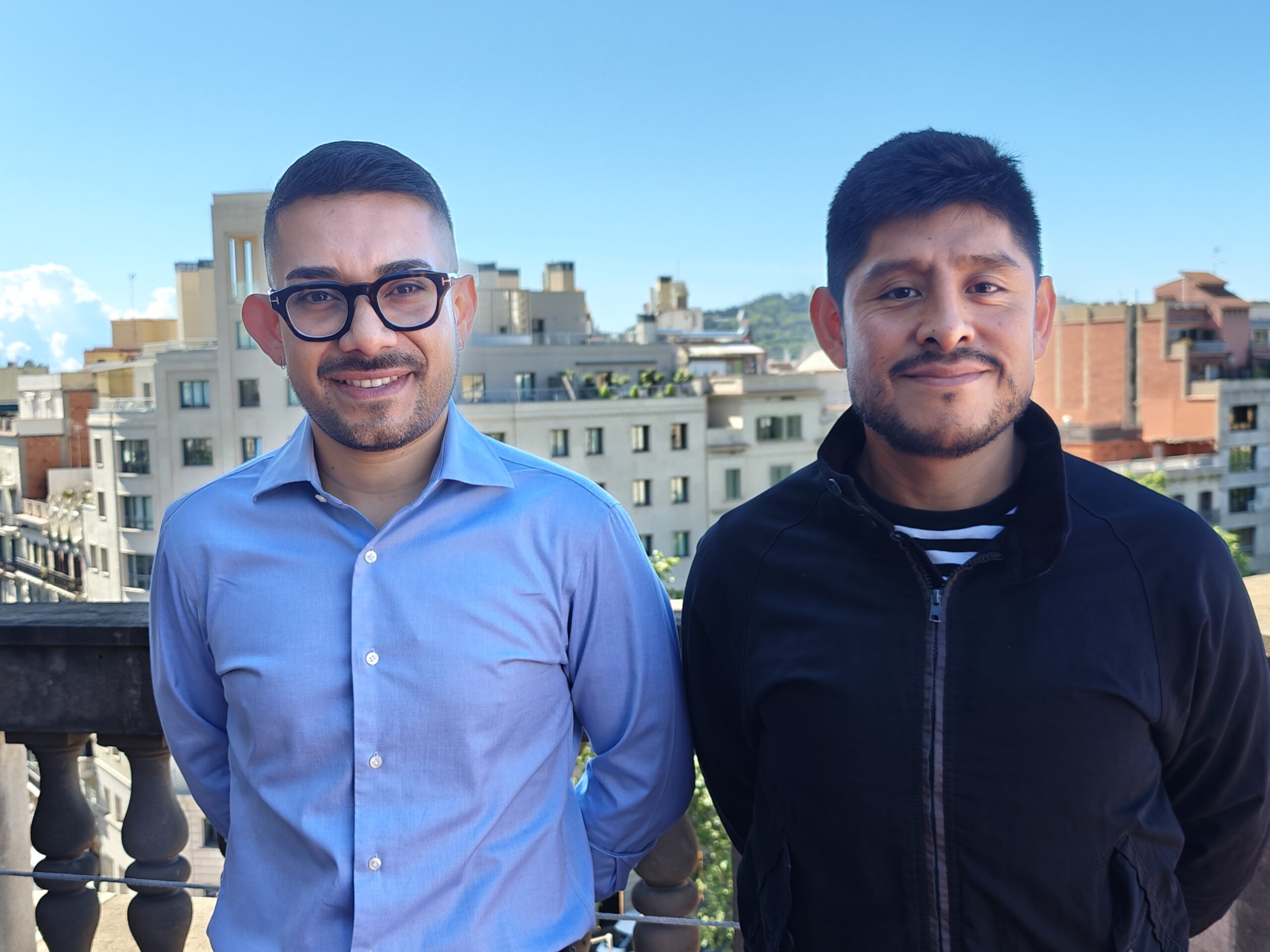
The leading researchers, Felipe Villalobos (left) and Martín Solórzano (right)
In February 2024, Brazil became the first country in the world to offer a dengue vaccine free of charge and on a large scale through its public healthcare system, prioritising children aged 10 to 14 years, the age group with the highest rate of dengue-related hospitalisations. Since then, more than six million people in the country have received at least one dose of the vaccine. This initiative has significantly reduced cases of symptomatic dengue and related hospitalisations.
However, a very small number of vaccinated individuals have developed what is known as vaccine-associated enhanced disease (VAED), a very rare phenomenon that has also been observed with other vaccines, in which a vaccinated person develops a more severe clinical form of the disease after becoming infected with the virus.
Preventing VAED
IDIAPJGol is leading an epidemiological project aimed at identifying signals that may help detect VAED in people vaccinated against dengue. The objective is to assess the vaccine’s safety and effects through a pilot study currently being conducted in Brazil, which will later be expanded to other Latin American countries where dengue is endemic.
The project is funded by the Pan American Health Organization (PAHO), the regional public health authority affiliated with the World Health Organization. In addition to being led by IDIAPJGol, the initiative involves Vall d’Hebron University Hospital and the Tuscany Regional Health Agency.
This epidemiological project is complemented by another line of research led by Harvard University, which uses omics techniques to investigate the biomolecular and immunological characteristics that may predispose vaccinated individuals to developing VAED following dengue vaccination.
The epidemiological project is coordinated by Felipe Villalobos and Martín Solórzano, researchers from IDIAPJGol’s Cross-Cutting Research Unit, who presented the initiative at the latest World Vaccine Congress, held last April in Washington, D.C. (United States).
Epidemiological Patterns
Villalobos explains that the team is currently identifying clinical dengue data collected in Brazil and other countries in South and Central America to detect epidemiological patterns associated with VAED.
In addition to the established clinical criteria, the researchers propose additional assessment domains (temporal, haemodynamic, multisystemic and epidemiological) which expert committees may use to determine whether a clinical pattern observed in a vaccinated individual is disproportionate compared with the severe dengue cases expected within the same epidemiological context.
According to Villalobos, “VAED appears to be more frequent among young adults, somewhat more common in DENV-3 serotype infections among baseline seronegative individuals, manifests with severe symptoms characteristic of atypical dengue, and is detected more often during periods of rain and high temperatures.”
The IDIAPJGol researcher highlights that, once the analysis results are available, “we will develop a clinical guide to help identify signals that may indicate VAED in clinical settings.” This protocol is expected to support the identification of patterns associated with VAED.
Villalobos also explains that the project “will strengthen pharmacovigilance systems in Latin America through the development of clinical registries.”