The implementation of a group-based psychoeducational program among primary care professionals could help reduce emotional stress and improve team functioning, in a context marked by a high care workload. This is the conclusion of a study led by a research team from IDIAPJGol, published in the journal Healthcare.
This work is part of the evaluation of an emotional well-being program promoted by the ICS Primary Care Directorate, whose impact has been analysed by IDIAPJGol through a qualitative approach.
A space to care for professionals
This study is based on the qualitative evaluation of a program implemented in 81 primary care centres of the Institut Català de la Salut (ICS), involving more than 1,400 healthcare professionals between September 2022 and February 2024.
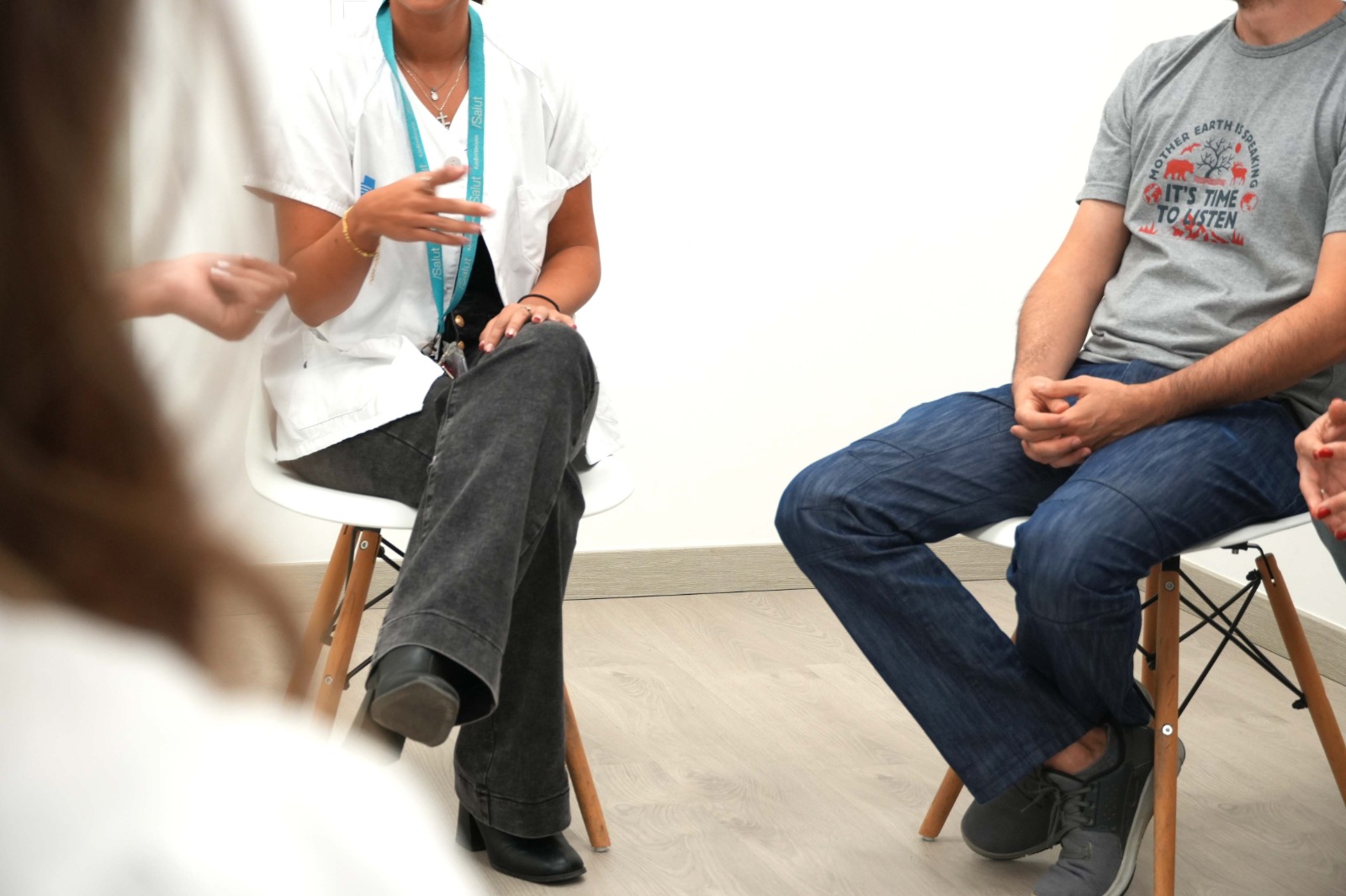
The results show that the group sessions were perceived as a safe space for emotional expression, reflection, and the development of self-care strategies. In addition, participants highlighted that these sessions fostered team cohesion and strengthened mutual support among professionals.
This qualitative study is complemented by another quantitative analysis recently published in Atención Primaria, which reinforces the findings and provides additional evidence of its positive impact on professionals’ emotional well-being and team dynamics.
Key role of RBECs
One of the central elements of the program is the involvement of community psychologists, known as Emotional and Community Well-being Referents (RBEC). “Their proximity to the teams and their understanding of the healthcare context were key factors in building trust and facilitating participation,” the researcher’s state.
The study also highlights the importance of institutional support, particularly regarding the availability of protected time within the working day and the provision of appropriate spaces, which are considered essential to ensure effective and equitable implementation of the program.
Individual and collective benefits
Participating professionals report benefits at both individual and collective levels, including improved emotional well-being, the recovery of self-care habits, and strengthened communication within teams.
The study also identifies several challenges to sustainability, such as lack of time, workload pressures, and space limitations. Some participants moted that these initiatives should be accompanied by structural measures addressing the underlying causes of workplace stress.
Well received
The authors conclude that “emotional well-being programs are well received and can have a positive impact on primary care teams.” However, to ensure their continuity, they warn that “they need to be integrated into routine practice and supported by strong organizational commitment.”
Article references
Aragonès E, Rodoreda S, Guitart M, Garcia E, Berenguera A, Martín-Luján F, Rambla C, Aragonès G, Calvo A, Mas A, et al. Implementing a Group Psychoeducational Program for Emotional Well-Being in Primary Care Teams: A Qualitative Study in Catalonia. Healthcare. 2026; 14(3):402. https://doi.org/10.3390/healthcare14030402
Aragonès E, Rodoreda S, Guitart M, Garcia E, Berenguera A, Martín-Luján F, Rambla C, Aragonès G, Calvo A, Mas A, et al. Assessment of a psychoeducational group program for enhancing resilience and reducing burnout in primary healthcare workers in Catalonia: A pre-post study. Atención Primaria. 2026; 58(6):103483. https://doi.org/10.1016/j.aprim.2026.103483