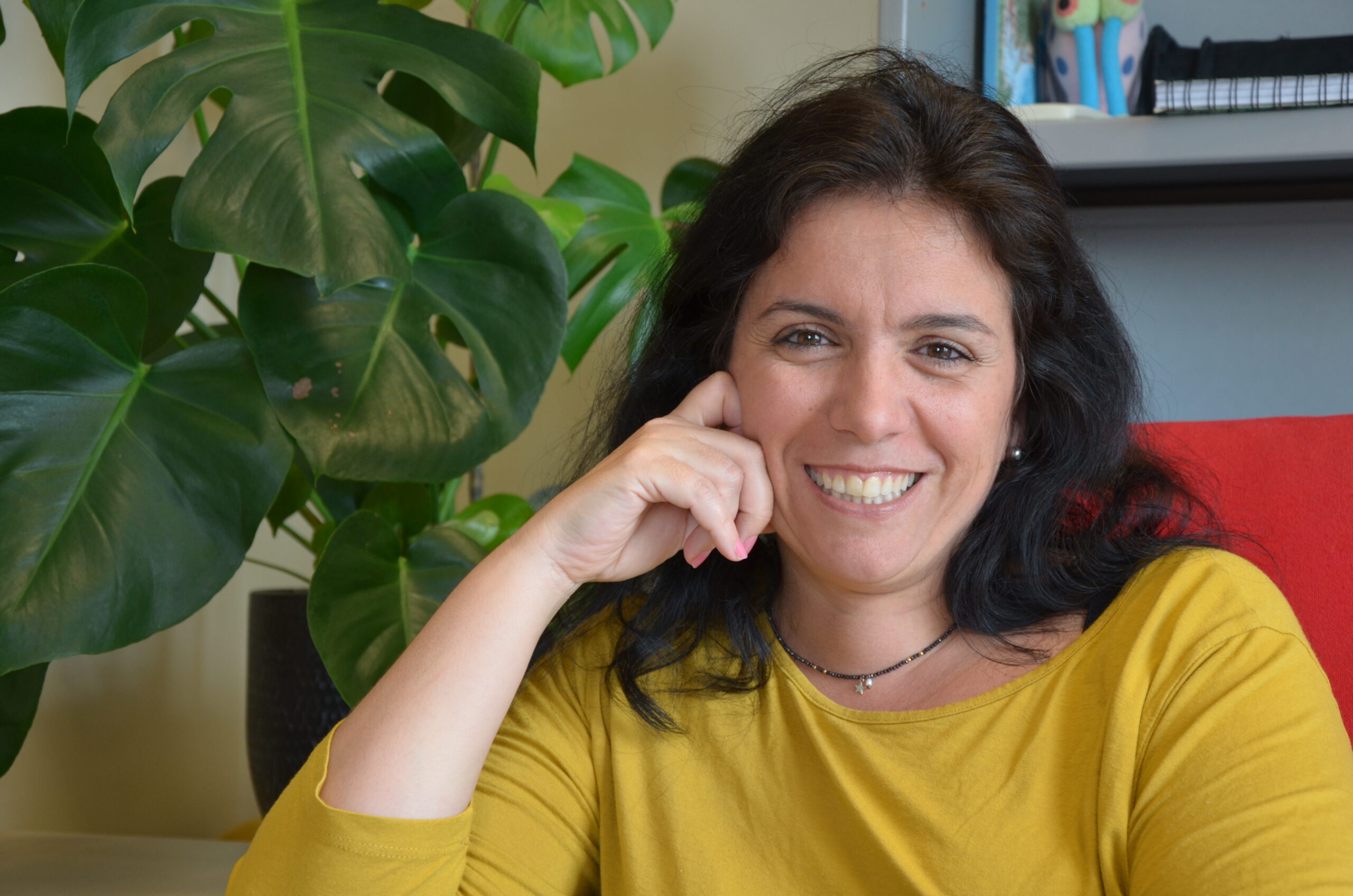
Sandra Illán is one of the pillars of IDIAPJGol. A person with an outstanding capacity for hard work and dedication who has more than proven it since the day she first joined the institute. Since 2017, she has been Head of the Corporate Resources Area, a position she earned on merit, as she was one of the people with the greatest knowledge of all the areas that make up this primary care research institute. We spoke with her to learn more about her personal and professional life.
As a student, did you already know you wanted to end up in a place like IDIAPJGol?
Oh no, not at all. I studied Business Administration and Management and the only thing I was sure about was that I didn’t want to work in auditing. I started working in a chemical company, in a role more focused on commercial objectives. The sectors I liked most were tourism and healthcare. And since learning languages didn’t particularly appeal to me, I took a master’s degree in management and administration of healthcare centers. While I was studying for the master’s, I started sending out CVs during the summer to healthcare companies and foundations all over Barcelona. I handed in my CV at the ICS and shortly afterwards IDIAPJGol called me. They called me in August and in less than a month I was already working.
What position did you start in? What were your responsibilities?
I started as a project financial manager. This meant controlling the funds awarded, managing the research team’s budget, ensuring the money was spent correctly and within the given timeframe, and submitting reports. This allowed me to be in contact with many researchers and to get to know the organization very well from the start. I eventually managed all the competitive projects at IDIAP.
You had a first break due to your first pregnancy, but when you returned, you got a surprise, right?
Exactly! In 2010, when I returned from maternity leave, I was offered the opportunity to work as a quality officer. Until then, we didn’t have ISO certification, and we saw that achieving ISO 9001 would allow us to access more calls and gain prestige. So I took it on, combining it with my usual tasks.
What did being a quality officer and implementing ISO mean for you?
It meant a lot, because it was a step forward both for the institution and for me professionally. Being a quality officer involves coordinating all IDIAP procedures, ensuring they are followed, and seeking improvements. A good example is the management and advisory processes for research projects: from submitting applications, through the research process, financial control, report writing, extensions, and so on. We started with seven procedures, and we now have 25 fully documented and strictly followed procedures. ISO compliance is very important, which is why there is a maintenance audit every year and recertification every three years. This year we are facing our fourth reaccreditation.
Is it difficult to follow all these procedures?
It’s not so much difficult as it is demanding, because you always have to stay on top of things since changes can occur. When I act as quality officer, I play the role of a “sheriff”: I review a procedure, check its indicators, talk to the people responsible for the area… If they see me wearing my quality officer’s hat, they run. Still, with the help of all my colleagues, we manage to do it. Small observations always arise, but we resolve them throughout the year—that’s what continuous improvement is all about.
Over the years you have ended up holding one of the institute’s three executive positions: Head of the Corporate Resources Area. How did that happen?
Mine was one of those cases of catching a train that only comes once in a lifetime. I was comfortable with my role, but in 2017 the opportunity arose when the former financial director stepped down. It was a shock for me. I remember going home very affected by the departure of my boss, with whom I had a very good relationship. But then my eight-year-old daughter told me it was an opportunity for me and asked why I didn’t go for it. That made me think. When the selection process opened, I applied. They could choose someone internal or external, and everything was handled by an external consultancy. It was a tough selection process; I really suffered, but in the end they chose me. I already knew everything that was done here—it wasn’t just about managing numbers, but understanding how each unit worked. I had written all the procedures and their indicators, which gave me a comprehensive view of IDIAP. In addition, I had a very good relationship with the researchers. I asked for letters of recommendation and everyone was happy to support me. I also received a lot of encouragement from my colleagues, which I will always be grateful for.
You’re clearly very self-reliant. Haven’t you had a mentor?
I’ve worked very comfortably with everyone and learned a lot from many people. But it’s also true that I’ve always been very self-taught.
And what does holding this position mean for you now?
I’m very satisfied. I consider myself someone who adds value to the institute, and I really enjoy my work: human resources, general services, legal, financial areas, and so on. Except for the purely scientific side, you could say you’ll find me everywhere. It’s also a place where people feel very comfortable, with a great working atmosphere. As Pep says, we don’t talk about a company but about an institute, a foundation. We’re more human here, we take good care of our staff: flexible hours, fruit, coffee… things I really value. And I love working in the healthcare sector. Thinking that you’re working in an institute that truly helps people and adds value to society goes far beyond material gain; it’s not about making money.
How do you see your future and the future of IDIAPJGol?
I see my future right here, in this same office and in this same role. If everything goes well, I want to retire here. I’m very comfortable, we have a great team, and they won’t move me from here. Primary care research has a great future, and I’ll be here contributing my small part whenever I can.