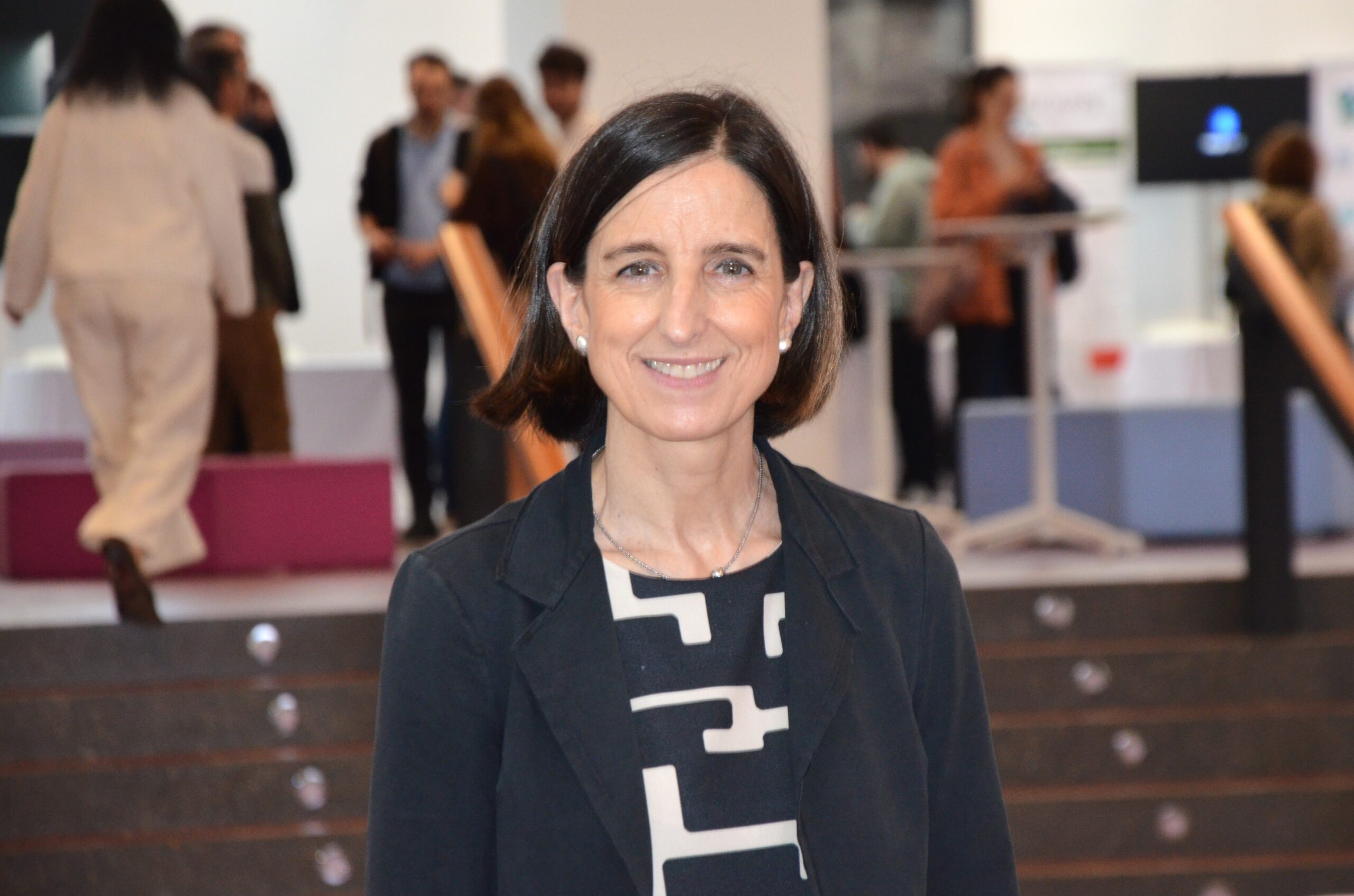
Since September 2025, family physician María Pilar Astier has been the president-elect of the World Organization of Family Doctors (WONCA), the international entity that represents the specialty of family medicine and acts as an interlocutor with the World Health Organization (WHO) and the United Nations (UN) regarding primary health care.
She currently practices at the Universitas health centre in Zaragoza, part of the Aragonese Health Service, is a teaching professor and researcher at the University of Zaragoza and a tutor for family physicians in specialized training, and an advisor on care quality and patient safety at national and international levels. Her research line focuses on improving patient safety in the healthcare system.
Astier knows IDIAPJGol well, because for years she has been part of its External Scientific Committee, from which she acts as an ambassador for the institution.
What being elected president of WONCA World meant to you?
I’ve approached it as a collective challenge. WONCA is an organization of family physician organizations, and my candidacy was presented by the Spanish Society of Family and Community Medicine (SEMFyC), which I am very grateful for, as well as to all the other people who voted for me.
During the past four years I’ve been on the executive board assuming different functions, as president of the Membership Committee and as liaison with the World Health Organization, and I’ve been the coordinator of the Quality and Patient Safety Group, so I know the organization well. Now, taking on the leadership is an opportunity to be able to promote projects that help transform health systems and reorient them toward primary care.
What challenges do you face in this term?
During the coming years we need to design WONCA’s new strategic plan. The current one ends in 2027, so from 2026 onward we’ll need to start preparing the next plan. We want to map the situation of family medicine throughout the world and know exactly what its status is and that of the professionals, as well as the definition of minimum professional competencies in those countries where the specialty of family medicine is not recognized.
In 2026 there will also be important changes in international organizations: the directors general of the UN and WHO will complete their terms and people with global consensus will need to be found to lead both organizations. We need leaders who are committed to public health systems, to universal coverage, to a model that doesn’t impose an economic burden on people and that guarantees access to family physicians in primary care services coordinated with public health and other levels of care.
Another important challenge is that 2028 will mark the 50th anniversary of the Declaration of Alma-Ata and the tenth anniversary of the Declaration of Astana, which means the key role of primary care will be back on the table. I think we’ll have the opportunity to incorporate family medicine into the definition of primary care as a key role in teams. It’s a good opportunity, at a time when more and more countries are recognizing it as a specialty.
You’re the first Spanish woman to assume the presidency of WONCA World. What factors do you think have contributed to this?
The first is that internally we’ve been able to present a solid international candidacy from SEMFyC. The Spanish physician Verónica Casado, who was elected in 2018 as the world’s best family doctor, opened the way and has inspired us greatly.
The second is that here we have a very well-structured specialty. Family physicians receive very complete training, with an assessable program that is giving very good results.
The third is that we have a good primary care model, in which the family physician is the doctor of individuals and the community, and the entire population, wherever they live, has access to their family physician, which doesn’t happen in all countries.
I am the product of all this, and I represent many family physicians who have been working consistently at the international level.
What is the situation of Family Medicine and primary care in the world?
There’s a lot of variability. There are countries that are taking off with great force, like China, which is applying territoriality criteria and defining specialist training, following a model very similar to ours. They’re investing heavily in technology in primary care and betting on digital health. They have a huge challenge to serve a very large population in an immense territory, and they’re doing it well.
Then there are other countries with primary care systems that are in a transition phase, and you don’t need to go very far for this; you just need to cross the Pyrenees. In France, traditionally Family Medicine has been a liberal profession, practiced in private clinics. This has caused many territorial inequalities and now there are territories without family physicians. The health regions in France are beginning to get involved and a transformation process is taking place with the involvement of municipalities. In the rest of Europe, there’s a lot of variability. The Nordic countries have a long tradition of multidisciplinary primary care teams that work very well, and in Eastern Europe primary care models are being deployed in many countries.
In Africa, WHO gives a lot of support to countries to open primary care centres, and in South America WONCA has an agreement with the Pan American Health Organization to work directly with governments on the deployment of primary care and the consolidation of the family and community medicine specialty on the continent.
There are also other interesting experiences in South Asia, for example, in India or in the Eastern Pacific where primary care models are gradually being implemented with a structure organized around family physicians.
In general, progress is being made in guaranteeing minimum primary care services to the population, which increasingly needs greater care, considering the role of family and community medicine.
What are these minimum services that primary care should offer?
Chronic diseases are growing throughout the world, and not only in developed countries. Obesity, hypertension, diabetes and all the complications that derive from these diseases, such as strokes or amputations, are increasing alarmingly in middle and low-income countries. It’s a wave that will become increasingly larger and, if we don’t put in place means to address it, it will overwhelm us. That’s why it’s so important to deploy strong care that does health prevention and promotion, that follows chronic patients and that reduces the complications they may have to increase people’s quality of life and prevent avoidable losses.
One of the problems primary care has, both in our country and globally, is lack of funding. A few years ago, SEMFyC and WHO were calling for 25 % of health funding to correspond to the first level of care. Currently, in Spain it doesn’t reach 14 %. Is it feasible to achieve this goal? Does it make sense to set this percentage?
I think that instead of fighting to achieve a certain percentage we need to fight to invest in projects. It’s easier for health managers to invest in a linear accelerator than in a primary care project, which is more intangible and whose results will be achieved in the long term. Here we primary care professionals have a challenge; we must be able to demonstrate the usefulness of the primary care service reorganization projects for the community that we propose.
In our immediate environment, in Catalonia and Spain, what challenges does Family Medicine and primary care face?
On the one hand, we have an aging problem, and not only of the population, which entails more chronic diseases and more complexity in care, but of professionals. We’re experiencing a generational replacement process that we don’t seem to be managing adequately. During the coming years the number of retirements will increase, and we don’t have a generational replacement.
It’s also important to improve team integration, increasing the multidisciplinary approach. This is something you’re doing well in Catalonia. You’ve integrated well family and community nursing into teams; they do good demand management and work on derived prescription, which is an important issue, because it commits the entire team around the patient’s needs. In this there are few autonomous communities that have advanced as much as Catalonia. Also, in the integration of other professionals, such as psychologists and physiotherapists. Then there’s also the educational issue, that primary care teams collaborate with schools and high schools. In this sense, the Health and School program is giving very good results with nursing professionals who address the health needs of the school population.
In Aragon, where I’m from, we have the social sphere very well integrated, in Navarre they’ve worked a lot on the nursing model, in Galicia and Madrid there are very good experiences in information systems, which allow the patient’s journey through the system to be reflected and coordinated very well… The fact that in Spain we have a decentralized primary care model allows us to have very good experiences in various communities. If we know how to take advantage of them together, we can improve a great deal.
Another challenge we have is to manage to integrate citizens into the process, make them co-responsible and promote their participation regarding their health and the use and improvement of primary care services for the community.
Are universities providing good training for future family medicine specialists?
This is the Achilles heel of the specialty. One of the lines we’re considering is placing Family Medicine at the centre of the training curriculum, so that medical students have contact with this area of care from the beginning of their studies. Now in many medical schools, students go to a primary care centre at least once a week. If they do this for six years, it will enable them to have a global perspective of care, to be able to address different health problems and see how social determinants influence patients’ evolution, to have a community approach to care.
On the other hand, it’s important to facilitate family and community medicine specialists being able to participate in teaching. It’s complicated for family physicians to combine clinical activity with teaching and research. We need to develop mechanisms that allow activity to be made more flexible, so that professionals who want to can dedicate part of their time to teaching and researching. In addition to being positive for the care we offer patients, it also helps reduce the risk of burnout among professionals.
Do you consider that the Family and Community Medicine specialty has prestige within the profession?
Increasingly so. The key is trust, and I detect that other specialists trust us more and more. For example, today I saw a patient who had gone to urology for a follow-up of prostate cancer after having radiotherapy and who told the urologist that he had pubic pain. This physician recommended that he find a good family doctor to guide him properly, because that pain didn’t seem to have anything to do with a urological problem. The patient came, we examined him and, in the end, we detected an inguinal hernia. We ordered an ultrasound and a visit to surgery. At the end of the visit, the patient told me “the urologist was right, doctor, I needed to come to the family physician.”
What is the situation of research in the field of primary care?
The situation is complicated, because for most primary care professionals, researching is a voluntary and unpaid activity. It can’t be that you spend eight hours every day seeing patients and when you finish you dedicate your free time to analysing data, generating evidence about the positive impact of primary care on community health and trying to publish those results. That exhausts anyone. Moreover, quite understandably, new generations prioritize work-life balance, and research often doesn’t fit into that.
How can this situation be solved?
By freeing up part of the time of professionals who are interested in research so they can dedicate themselves to it. In this sense, IDIAPJGol’s intensification grants serve this purpose and are giving very good results. They allow clinical professionals to dedicate part of their work schedule to research without losing contact with clinical reality.
What is your view of IDIAPJGol?
Its conception was a very brilliant idea, because it identified a need within primary care teams, which was to generate a research environment, to promote new generations of researchers who work on health outcomes in relation to primary care. And the results are very positive.
I think it’s important to create environments in which we make a certain positive discrimination for research in primary care. Otherwise, it’s very difficult to be able to compete with research being done in the field of cardiology, oncology or other specialties that have a very solid structure, with a long tradition, and that have journals with a very high impact factor.
It’s also fundamental to incorporate various professionals into research projects, beyond family physicians, and IDIAPJGol is doing this very well, because it integrates nurses, physiotherapists, social workers… the entire primary care team. Now the challenge is how we can incorporate patients, citizens, into research projects, so they can participate in research processes. This is easier in primary care than in the hospital setting. Here IDIAPJGol has a great opportunity.
What functions does IDIAPJGol’s External Scientific Committee have and what activities does it do?
Those of us who are part of the External Scientific Committee contribute our perspective, our experiences in other settings, in other countries, and this is very enriching. We also act as ambassadors for IDIAPJGol and help it establish alliances with other institutions.
Additionally, we participate in the evaluation of grants and accreditations, and in those tasks that the centre’s management assigns to us.
A few weeks ago, the second IDIAPJGol groups retreat was held, which this year has focused fundamentally on generational replacement. How do you think this challenge should be addressed?
Certainly, by addressing the issue and involving residents more. I think an important element is linking us with the new specialty program that was launched in August, which promotes all residents doing a research project at the end of their residency. This will be a good hook for incorporating new generations. It’s evident that we won’t see the results for a few years.
In our country, when a physician chooses the specialty and begins working in a health centre they disconnect from the university and very often they also disconnect from research. Until now we haven’t known how to reconnect them. The key is that the connection with the university and the research centre not be lost, that there be more physicians who do their doctorate, especially family and community medicine specialists, who complete a research project, because in this way they’re already inside the wheel; they can enter a research group, apply for grants… continue researching.