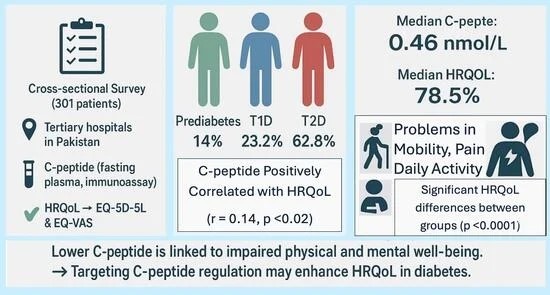
People with diabetes mellitus, especially those with type 1 diabetes, experience a lower quality of life and more problems related to mobility, pain and mental health when their C-peptide levels are reduced. This is demonstrated by a study published in Biomedicines. The paper summarises the findings of the doctoral thesis conducted by Sajid Iqbal, carried out within a joint research project involving the EBRICTUS group at IDIAPJGol, Rovira i Virgili University and the University of Punjab (India), under the supervision of researchers Josep Lluís Clua-Espuny and Sílvia Reverté-Villarroya. The authors highlight that C-peptide levels may be used as indicators to help prevent physical and emotional deterioration in patients.
The analysis included 301 patients seen between January and June 2023, divided into three groups: people with prediabetes (14%), type 1 diabetes (23.2%) and type 2 diabetes (62.8%).
C-peptide is an indicator of pancreatic beta-cell function and is used to determine the body’s ability to produce insulin. The authors measured C-peptide levels through blood tests and assessed participants’ quality of life using the EQ-5D-5L questionnaire.
Differences in levels
According to the data, C-peptide levels differed significantly across the three patient groups. As expected, individuals with prediabetes showed higher concentrations of this substance, while patients with type 1 diabetes had very low levels, reflecting a severe reduction in their beta-cell function.
In the questionnaire, people with type 1 diabetes also reported poorer quality of life, with greater mobility difficulties, more problems performing daily activities, pain and anxiety or depression.
C-peptide and quality of life
The study identifies a positive correlation between C-peptide levels and quality of life: higher values of this marker were associated with better mobility, less pain and lower levels of anxiety or depression.
The authors conclude that “understanding this relationship may help improve clinical management of diabetes, as C-peptide may serve as a useful indicator for detecting patients at greater risk of deterioration in their physical and emotional well-being”. They also highlight the need to continue investigating the role of this biomarker in the progression and complications of diabetes.
Article reference
Iqbal S, Reverté-Villarroya S, Rizvi NB, Butt H, Clúa-Espuny JL. Assessing Plasma C-Peptide Levels and Their Relationship with Health-Related Quality of Life in Patients with Prediabetes and Type 1 and Type 2 Diabetes. Biomedicines. 2025 Oct 3;13(10):2423. doi: 10.3390/biomedicines13102423. PMID: 41153704; PMCID: PMC12562179.