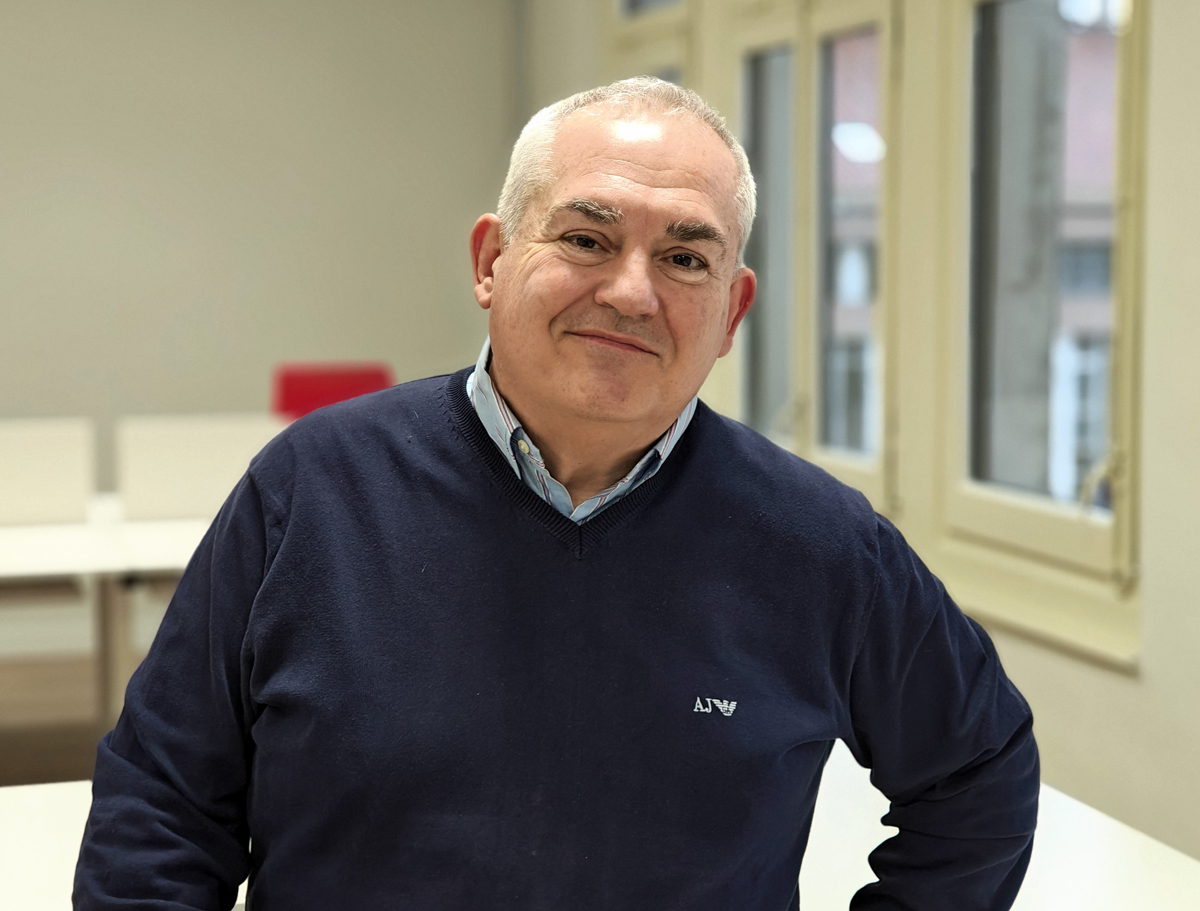
The 2021–2025 Strategic Plan of IDIAPJGol has been one of growth and transformation for the institution, while the plan for the next five years will focus on its consolidation as an international reference research center in primary care. This is stated by the Director of the institution, Josep Basora, who highlights that the key to the success of the completed Plan lay in the high level of participation during its drafting and its realistic and practical approach, aligned with the priorities defined in the 2021–2025 Health Plan.
Basora notes that 90% of the actions included in the 2021–2025 Strategic Plan have been implemented. The Director of IDIAPJGol emphasizes the increase in activity, as well as the growth of the research community and staff at the institution over the past five years. During this period, the number of people employed by the Institute increased from 58 to 138—nearly a 140% rise; the number of active research projects grew by almost 60%; and funding for new projects more than doubled.
Greater presence across the territory
The Director of the Institute highlights that, over the past five years, research support units have been strengthened, meaning that IDIAPJGol now has a stronger presence across the territory and a more decentralized management structure than ever before. Dr. Basora also points to the commitment to innovation through the creation of the Innovation Agency, which emerged from the 2021–2025 Strategic Plan—an organizational structure that has helped bring innovative initiatives in primary care to the surface and enabled participation in innovation networks throughout the country.
The Director of IDIAPJGol notes that, following the completion of this Strategic Plan, the center is now involved in several platforms of the Carlos III Health Institute and is part of the advisory boards of various private companies. Over the past five years, the Institute has also renewed the composition of its External Scientific Committee, which, according to Josep Basora, “has a more international composition than any other research institute in our environment,” and whose members are highly active, helping IDIAP to strengthen its relationships and presence beyond national borders.
Dr. Basora also notes that during these five years the Institute has created an Office of the Researcher Ombudsman and a Code of Good Governance, pioneering initiatives within the sector.
Media presence
Regarding communication and institutional relations, the Director of IDIAPJGol explains that the center is now more visible than ever—both in the media and on social networks, as well as in decision-making arenas such as the European, Spanish, and Catalan parliaments. It also maintains very close relationships with virtually all biomedical research institutes in Catalonia, with which it has established collaboration agreements. He further highlights the growing presence of IDIAPJGol in national and international multicenter research networks and programs, which “translates into an increase in high-impact publications.”
IDIAP has also signed collaboration agreements with various providers that manage primary care teams—beyond the Catalan Health Institute (ICS)—which have integrated their research activities into the center. These include the associative-based entities of Vallcarca, Sant Gervasi, and Sarrià; Badalona Serveis Assistencials; the Girona Institute of Health Care (Institut d’Assistència Sanitària); Aran Salut; the Maresme Health Consortium; and the Maresme and La Selva Health Corporation, among others.
Social focus
Josep Basora feels particularly proud of the social focus of the research carried out by the Institute’s researchers. In this regard, the Director of IDIAPJGol highlights the involvement of patients and the general public in various projects, as well as the importance of qualitative research in many of the activities being undertaken.
With respect to research services and platforms, the Director points to the renewal of AGICAP—the Agency for Clinical Research in Primary Care—which “plays a fundamental role and was highly active during the pandemic,” as well as the strengthening of the Research Ethics Committee, which “serves as the reference committee for the Department of Health and the primary care community.”
In terms of research organization, Basora underscores the significant work carried out under the Strategic Plan to define research lines and major areas (mental health, healthy aging, chronic diseases, and service evaluation). He also highlights efforts to address issues such as relationships between research groups—an area for which IDIAPJGol has developed a code based on the participation of the Institute’s researchers—and generational renewal, which was a topic of debate at the Institute’s most recent retreat, held in November 2025.
Professional career development
Internally, the 2021–2025 Strategic Plan promoted the creation of a professional career plan for IDIAPJGol researchers and another for research technicians. The Institute has also recently established a Works Council, a body that safeguards the rights of the Institute’s employees and which, according to Basora, “represents an opportunity to improve labor relations.”
The Director of IDIAPJGol also mentions the improvements made to the Institute’s headquarters, including a more rational distribution of workspaces and the addition of a new multipurpose room.
Basora notes that the Strategic Plan has made it possible to “place management at the service of researchers and of the professionals who make up the organizational structure.”
Consolidating IDIAPJGol
IDIAPJGol is currently preparing its new Strategic Plan, which will be in force from 2026 to 2030. “The major challenge we now face is increasing the impact of our research projects on clinical practice,” emphasizes Josep Basora. “We are not a basic research center, nor a public health research center; we are a primary care research center, and our research must be oriented toward incorporating clinical improvements that help enhance people’s health.”
At present, the new Strategic Plan is in the preparation phase. During the second half of February or the first half of March, a participatory event will be held with the attendance of researchers and professionals who are part of the support structure. The Plan is expected to be approved in April at an extraordinary meeting of the Board of Trustees, and it will be publicly presented during this year’s IDIAP Conference, to be held in June.