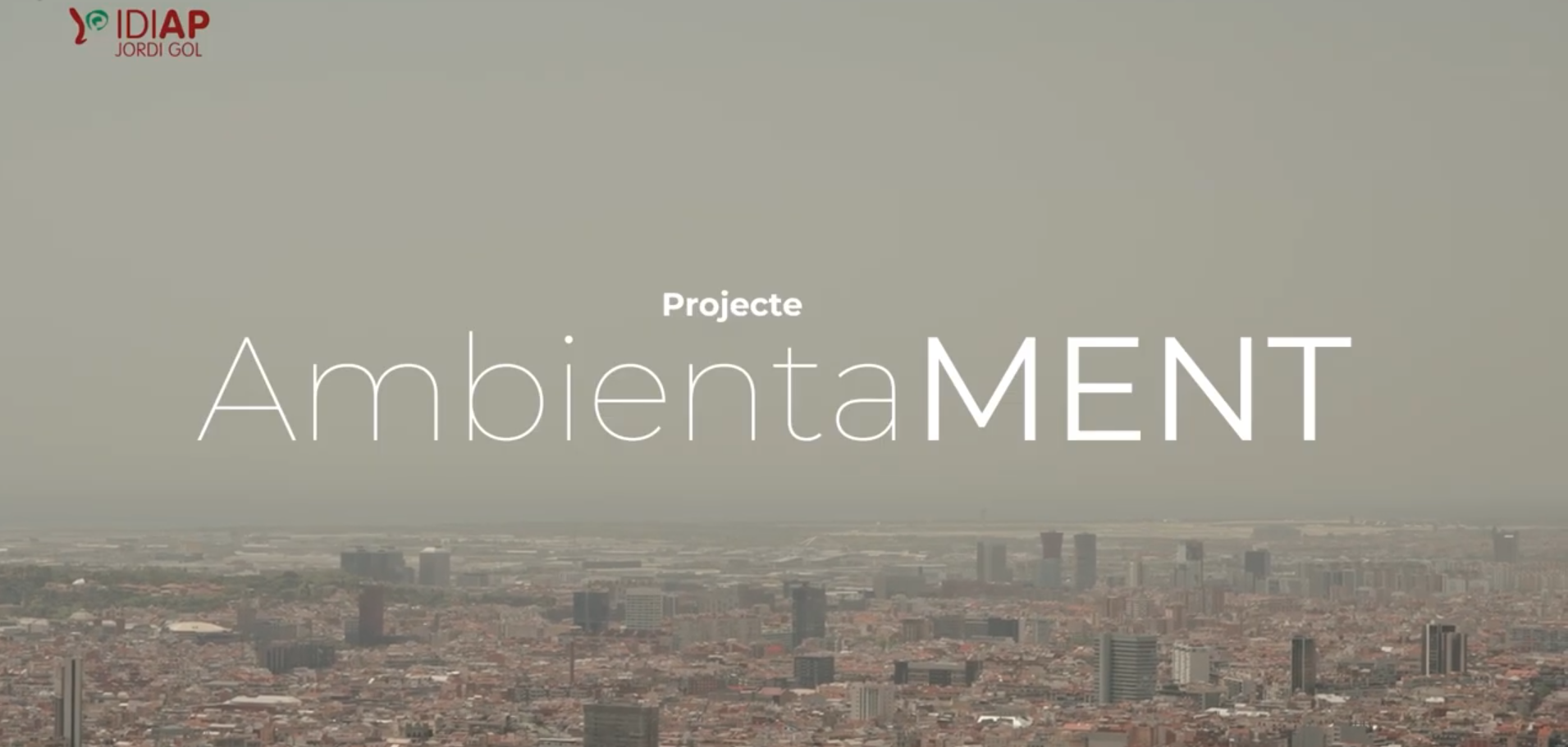
Exposure to extreme temperatures and high levels of air pollution is associated with an increased risk of anxiety, depression, and other impairments to emotional well-being, with a particularly marked impact in neighbourhoods with greater social vulnerability.
This is one of the main conclusions of the AMBIENTAMENT project, led by researchers Andrea Pistillo, Constanza Jacques Aviñó, and Talita Duarte-Salles from the Jordi Gol Primary Care Research Institute (IDIAPJGol) and the Network for Research in Chronicity, Primary Care and Health Promotion (RICAPPS). The project analyses how the climate crisis affects mental health in the metropolitan area of Barcelona from a social and gender perspective.
The interdisciplinary study combined a critical review of the scientific literature with a qualitative study and a quantitative study, aiming to understand not only the environmental effects on health but also the social inequalities that shape them.
Social inequalities
The qualitative study, coordinated by IDIAPJGol researcher Constanza Jacques Aviñó, was conducted through 60 semi-structured interviews with residents of three neighbourhoods with similar environmental and temperature characteristics but different socioeconomic levels: Left Eixample and El Raval in Barcelona, and the La Florida neighbourhood in L’Hospitalet de Llobregat.
The results show that although environmental awareness is present across all social groups, coping strategies in the face of extreme heat and pollution vary significantly depending on material resources and living conditions. “One thing is awareness and discourse about the climate crisis, and another is how this crisis impacts people’s daily lives,” explains Jacques Aviñó.
In lower-income neighbourhoods, the lack of green spaces, shade, and climate shelters, as well as small and poorly insulated housing, limits the ability to protect oneself from heat. In contrast, in areas with a medium socioeconomic level, access to air conditioning, green spaces, or the possibility of leaving the city during extreme heat episodes acts as a protective factor for emotional well-being.
Measurable impact
The project’s quantitative study, based on data from SIDIAP, analyses the relationship between exposure to high temperatures and air pollutants, such as fine particulate matter (PM2.5, PM10) and nitrogen dioxide (NO₂), and the incidence of mental health diagnoses.
The results indicate that 12% of the analysed population received a diagnosis of anxiety and 4% a diagnosis of depression during the study period, with more than 60% of cases diagnosed in women. Exposure to high temperatures is associated with a 43% increase in the risk of anxiety and a 26% increase in the risk of depression. The research team is analysing other lower-intensity results related to pollution that point in the same direction.
According to the researchers, these effects may be linked to processes of inflammation and oxidative stress caused by air pollution, as well as increased stress, irritability, and aggressiveness during episodes of extreme heat.
The need for urban and participatory policies
The AMBIENTAMENT project highlights that the climate crisis is not only an environmental problem but also a factor that exacerbates existing social and health inequalities. In this regard, the research team emphasizes the importance of investing in the urban fabric, expanding green spaces and climate shelters, and doing so while considering the social and cultural practices of each area.
“It is essential to involve citizens in the design of solutions and to understand the real needs of each neighbourhood,” notes Jacques Aviñó.
“The rise in temperatures due to climate change should be considered a potential determinant of anxiety and depression, and mental health must be included in public health plans responding to heatwaves,” emphasizes researcher Andrea Pistillo.
Article reference
Pistillo, A., Giuliodori, A., Palomar-Cros, A., Gallo, E., Aragonès, E., Ballester, J., Marí-Dell'Olmo, M., Basagaña, X., & Duarte-Salles, T. (2025). High temperature and mental health in 3.3 million adults living in Barcelona metropolitan area: a 12-year time series analysis of primary care data. Environment international, 203, 109748. https://doi.org/10.1016/j.envint.2025.109748