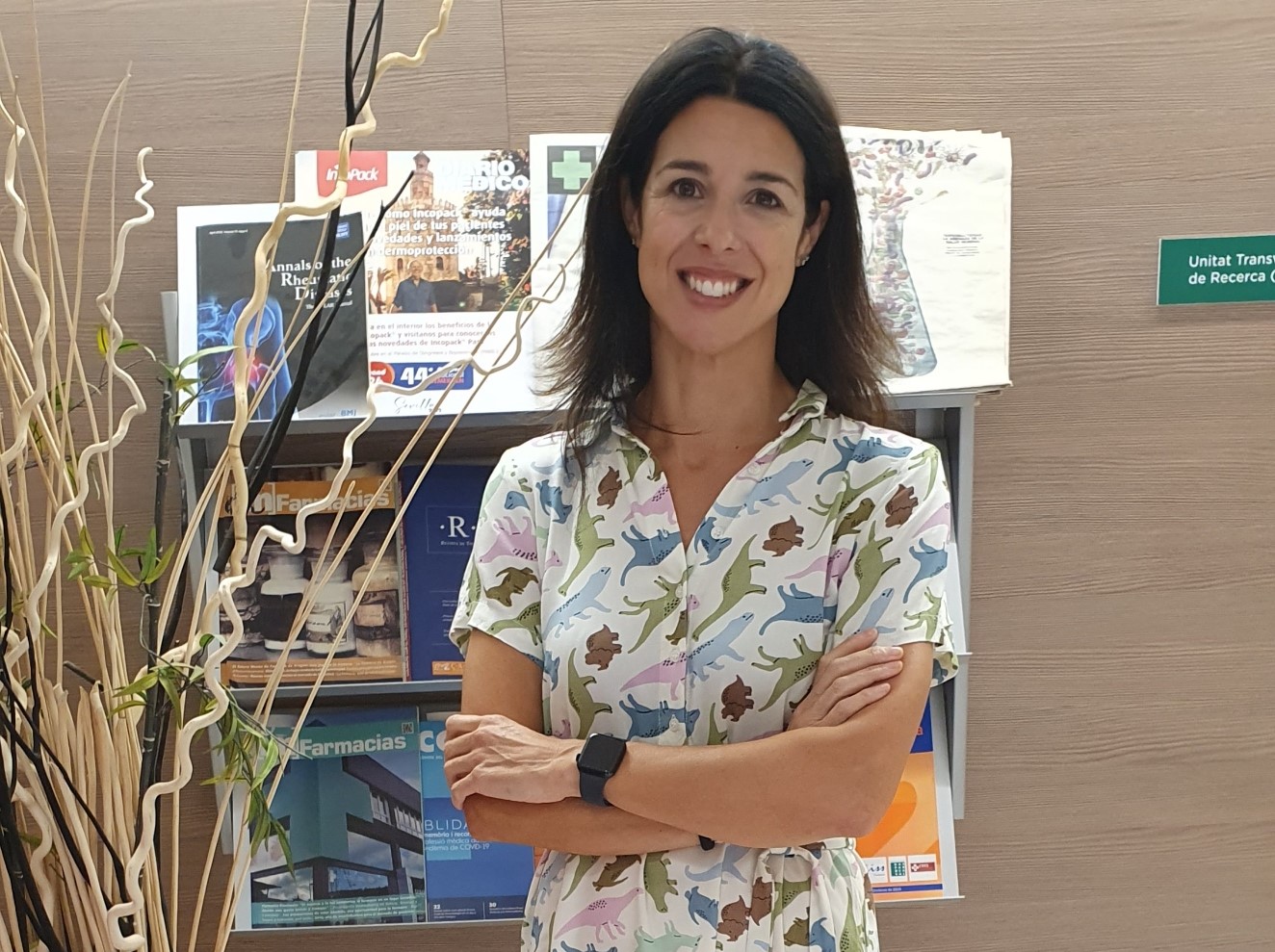
The study “Overload in informal caregivers of people attended at home by primary care during the pandemic,” developed by nursing residents from CAP Bon Pastor, El Carmel, La Mina, and Poblenou, has recently received two recognitions: the award from the XIV Research Day for Primary Care and Community Residents of Barcelona City (APBCN) and the 1st prize of the XI Day of specialists in Family and Community Nursing of the Association of Family and Community Nursing of Catalonia (AIFICC). We speak with Carolina Lapena, specialist nurse and researcher at IDIAPJGol, who has been the tutor of this group.
How did this project start?
Within the training of family and community nursing residents, one of the tasks is to carry out a research project, and this one arose from the residents themselves. Initially, they considered various topics that could be interesting or motivating. One of these topics emerged as this study. I also really liked the idea because from the very beginning we knew it would be a mixed study combining different methodologies, both quantitative and qualitative. It also fit very well with my idea of what this training process should be—a small taste of research. We knew it would be a “taster” because it was only two years, and we had to do many things in a short time, but it would let them try different methodologies and tools.
What did the research project consist of?
The project analyzed the variation of overload in caregivers of people included in the Home Care Program (ATDOM) of primary and community care in Catalonia, which serves people who normally cannot leave their homes, with high levels of dependence and frailty, and therefore need someone to care for them daily. We know that people caring for others are at risk of fatigue because it requires not only physical effort but, above all, emotional effort. The pandemic meant that these assistants stayed in homes caring for people while the healthcare system was focused on Covid detection and acute pathologies, and therefore all the support offered had to be readapted. We wanted to know how all this had impacted caregivers’ fatigue when attending to these relatives or close people they cared for.
And what are the conclusions?
During the peak of the pandemic, there was indeed a worsening among caregivers attending people in the program, but this was not because the ATDOM patients’ health had worsened, but due to fear or uncertainty, aggravated by their own health issues or because family or social support isolated them from external contact. Thus, the caregiver had no option to take breaks or relax occasionally, worsening their fatigue.
What have these awards meant for the group?
It is recognition for the work done by the residents. When they start residency, I understand they mainly want to see patients and get hands-on experience. A research project may not initially seem very motivating. I believe seeing that they have completed this project and drawn conclusions that can impact their daily practice, and that their research has value for their clinical work, is impactful. And if this recognition comes externally as an award from experts, it validates all the work. Moreover, if the awarded group consists of nurses, this is even more meaningful because historically, our research tradition has been less recognized or valued.
Tell us about the project’s applicability in primary care.
Although the study’s context was the pandemic, it allows us to draw conclusions when rethinking our work. We need programs that are highly adaptable because we don’t know if this will happen again, and it reminds us that we must work in networks. It’s not only healthcare services; there is a whole network of social resources, family, neighborhood agents… We must consider the characteristics of the neighborhood, population, family, and person we care for and incorporate them because everyone has their circumstances, which affect us. It also guides what information we collect in clinical records: we realized we lacked caregiver information; we had much information on the ATDOM patient, but perhaps we should also collect information on the caregiver, who is equally or more important. And we must ensure rigor, methodology, and evidence that justify our practices. This helps focus on the person providing care. As we always say, caring for the caregiver is more important than ever in studies like this.
What is your work like as a tutor for family and community nursing residents?
From the beginning, we plan the research work, which is the final goal. The first year is more formative, explaining basic research concepts and ideas. We also teach available resources, both instrumental and for searches, even physical resources from the Research Support Unit, and introduce them to people in the service or resources they can use, useful for this project and for their future careers. Then they begin fieldwork, seeing applicability and integrating it into their specific work with its topics and challenges while research progresses. This also positions you in the profession, questioning your daily practice, stepping out of your comfort zone, wanting to contribute and learn more, keeping curiosity and research alive.
Is it hard to get residents excited about research?
At first, it’s hard to get them interested; no one chooses to do research. It’s part of the curriculum, so they must do it. I keep repeating that my goal is for them to learn a few things, but mainly to enjoy it. If they enjoy it, they will continue. In these two years, there are moments of euphoria, satisfaction, and joy, and also difficult moments because integrating research is challenging. But at the end, they see the results, realize one thing enriches the other when talking with colleagues, and see that everyone achieved valuable outcomes. Finally, they see that the effort was worthwhile and may want to try again in the future. Why not?