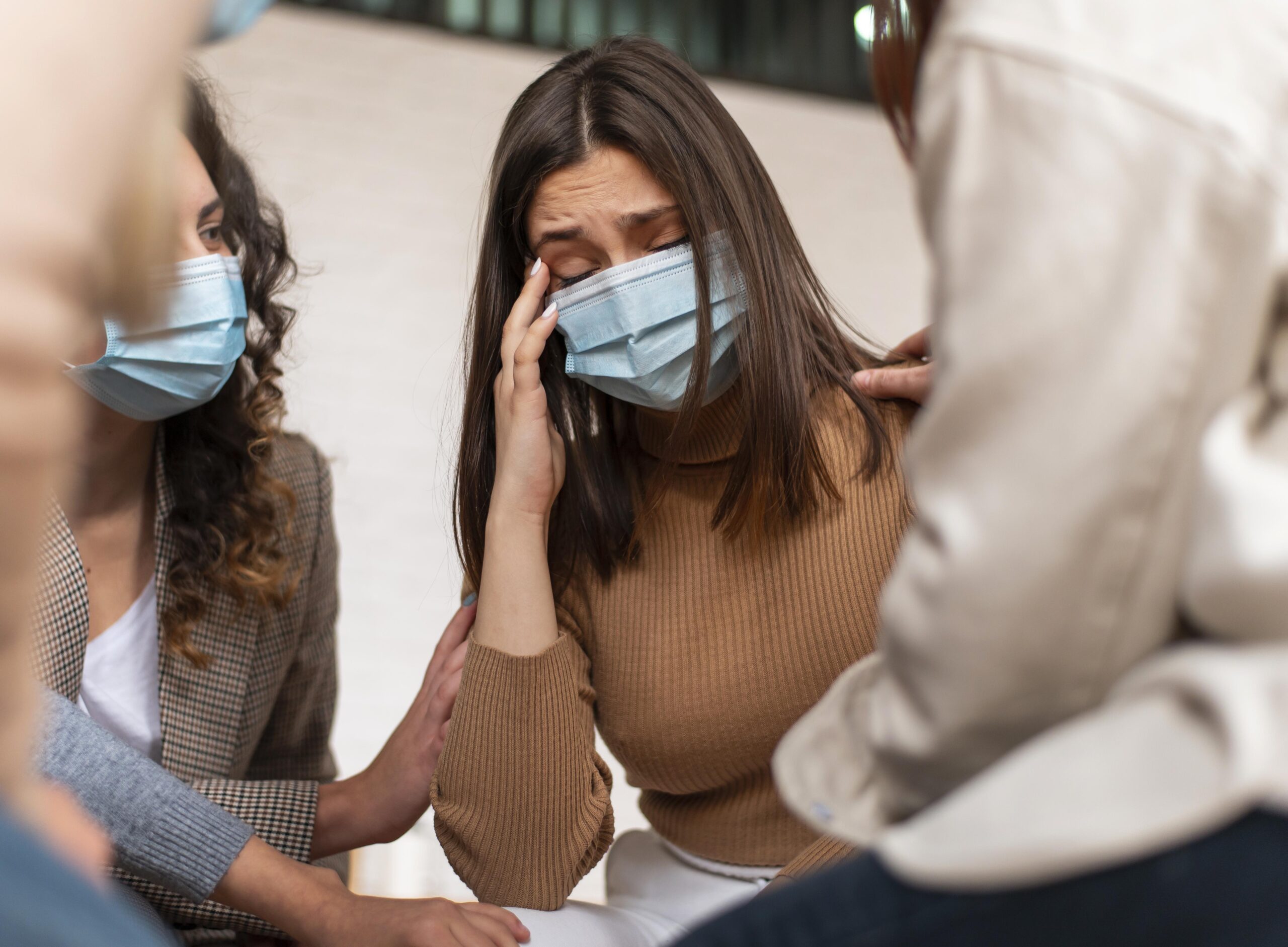
A study carried out between Spain and several Latin American countries concludes that the restrictions implemented during the COVID-19 pandemic affected mental health and self-perceived health unequally between and within countries. The impact of lockdown particularly affected women and young people. These are some of the first results of the study “Social Inequalities in Mental Health and Self-Perceived Health in the First Wave of COVID-19 Lockdown in Latin America and Spain: Results of an Online Observational Study.”
The study was led by Constanza Jacques Aviñó, who, together with Tomàs López-Jimenez, Laura Medina-Perucha and Anna Berenguera from the Jordi Gol i Gurina University Institute for Research in Primary Health Care (IDIAPJGol), has been studying the social impact of COVID-19 since the beginning of the crisis. This project also involved the following research centres: FIOCRUZ (Brazil), the Dr. Salvador Allende School of Public Health at the University of Chile, the Institute of Public Health at the Catholic University of Ecuador, the National Institute of Public Health of Mexico and the School of Public Health of Mexico, and the Cayetano Heredia Peruvian University.
This was a descriptive cross-sectional study conducted through an online survey of people aged 18 or over, living in Brazil, Chile, Ecuador, Mexico, Peru and Spain. The study population comprised 39,006 people. Data collection was carried out in 2020 during the first wave, between June and August (Brazil), May and August (Chile and Mexico), July and October (Ecuador), July and September (Peru), and April and May (Spain). The questionnaire was designed by a multidisciplinary research team in Spain and adapted to the specific context of each country.
The study focused on analysing mental health (anxiety and depression) and self-perceived health (SPH), that is, individuals’ subjective perception of their general health status over the past twelve months. SPH, anxiety and depression were measured and analysed alongside different social variables. Some of the most notable results were:
Our results suggest that social determinants are associated with a higher prevalence of and greater problems with mental health, especially among women, due to factors such as having been unemployed before the pandemic, worsening working conditions, the perception of living in inadequate housing, and a heavier burden of unpaid care work.
The research team suggests that Spain’s better results in both mental health and self-perceived health are due to social welfare policies and the shorter duration of home lockdowns (in Chile, for example, online classes lasted more than 18 months), compared to Latin American countries. Therefore, the researchers state that it is essential to strengthen universal social protection systems, including social security, education and health, and to adopt an approach that addresses social living conditions, as these caused an unequal impact on the population during the COVID-19 pandemic.
In this regard, they call for a vision that considers social health inequities within a planetary health model, addressing the systemic determinants of health that generate disease, inequality and environmental degradation. This implies including different actors and experiences to understand any health and social crisis from a holistic perspective. As this study suggests, there is now an urgent need to promote community resilience strategies, with policies and interventions that protect the population’s mental health while taking its determinants into account.
IDIAPJGol, research that is close to you
The Jordi Gol i Gurina University Institute for Research in Primary Health Care (IDIAPJGol) is a reference centre for research and health promotion at the primary care level. Its aim is to foster and develop innovation, clinical, epidemiological and health services research in the field of primary care, and to provide training in order to generate knowledge, disseminate results and translate them into clinical practice to improve the efficiency of the healthcare system and promote and improve people’s health.